
Author: Kongdy Patch
Date: 05 20,2026
If you spend 8+ hours a day sitting at a desk, you're probably no stranger to neck stiffness, shoulder tension, and lower back pain. According to the British Journal of Sports Medicine, over 80% of office workers experience musculoskeletal pain at some point during their career. The good news? Pain relief patches offer a convenient, non-invasive solution that you can apply before, during, or after work.
This guide covers everything office workers need to know about choosing and using the best pain relief patches in 2026.
Sitting for extended periods—even in an ergonomic chair—places significant strain on the body:
Most office workers also fail to take regular breaks, stretching, or movement breaks—compounding the problem day after day.
Transdermal pain relief patches deliver active ingredients through the skin directly to the target area. Unlike oral pain relievers, which must pass through the digestive system and liver before reaching the affected tissue, patches deliver ingredients locally and directly—often resulting in faster, more targeted relief.
The most common active ingredients in pain relief patches include:
Eucalyptus oil — natural anti-inflammatory and soothing agent
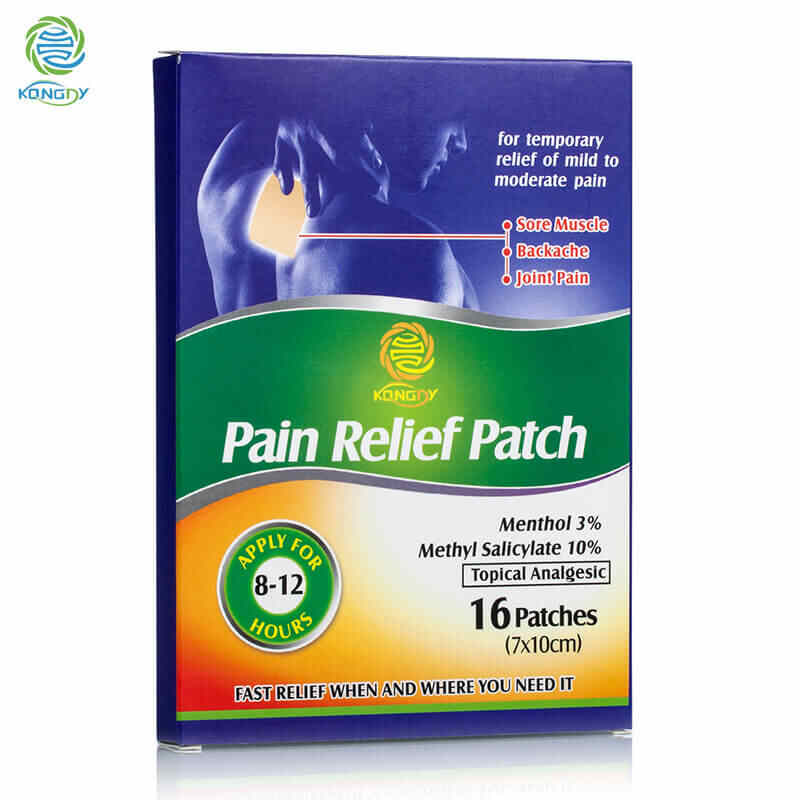
Neck pain in office workers typically stems from forward head posture and staring at screens all day.
Recommended patch type: Soft, flexible patch with menthol or capsicum formula. Look for patches designed for the cervical (neck) area, which typically come in curved shapes for better skin contact.
How to use: Apply to the back of the neck, just below the hairline. Wear for 8–12 hours for sustained relief.
Shoulder pain often results from upper trapezius tension—the muscle group that connects the neck to the shoulder blade.
Recommended patch type: Larger, rectangular or butterfly-shaped patches that cover the deltoid and trapezius area simultaneously.
How to use: Apply to the top of the shoulder where you feel the most tension. For bilateral shoulder pain, use two patches simultaneously.
Lower back pain is the #1 cause of disability among office workers worldwide. It's often caused by prolonged sitting and poor lumbar support.
Recommended patch type: Wide, elongated patches with warming ingredients (capsicum, methyl salicylate) or medicated formulations (lidocaine).
How to use: Apply to the lower back on either side of the spine, not directly on the spine. Avoid applying directly before or after intense exercise.
Repetitive strain from keyboard and mouse use causes carpal tunnel syndrome and forearm pain.
Recommended patch type: Small, narrow strips designed for wrap-around application on the forearm or wrist.
How to use: Wrap around the forearm, approximately 3–5 cm below the elbow, or directly around the wrist joint.
Not all pain relief patches are created equal. Here's what to look for when choosing the best patch for office pain:
| Feature | Why It Matters |
|---|---|
| Breathable material | Prevents skin irritation and allows comfortable all-day wear |
| Strong adhesion | Stays in place even during movement; won't peel off after sweating |
| Medicated formulation | Look for clinically tested ingredients (menthol, lidocaine, capsicum) |
| Low odor | Discreet for office use; won't disturb colleagues |
| Easy application & removal | Pain-free removal without leaving sticky residue |
| Extended wear time | 8–12 hour coverage is ideal for a full workday |
How it works: Menthol triggers the TRPM8 cold receptors in the skin, creating a cooling sensation that overrides pain signals. It's fast-acting, well-tolerated, and has virtually no side effects.
Best for: General neck and shoulder tension, mild back pain
How it works: Capsaicin depletes Substance P—a neuropeptide that transmits pain signals—over time. Users typically experience a warming sensation that becomes progressively more effective with repeated use.
Best for: Chronic neck pain, persistent shoulder tension
How it works: Lidocaine is a local anesthetic that blocks sodium channels in nerve endings, preventing pain signals from reaching the brain. It's the most potent over-the-counter option for immediate pain relief.
Best for: Acute pain flare-ups, sharp nerve pain, severe muscle strain
How it works: Related to aspirin, methyl salicylate provides both analgesic and anti-inflammatory effects when applied topically. It's particularly effective for pain caused by inflammation.
Best for: Pain with visible swelling, inflammatory shoulder or back pain
Prevention is better than treatment. Here are the best strategies for avoiding office pain:
KONGDY pain relief patches are manufactured by Henan Kangdi Medical Devices Co., LTD, a factory with 37+ years of experience producing transdermal patch products for global markets.
Our advantages for office workers and brands:
Office pain is a real, widespread issue—but it doesn't have to ruin your workday. Pain relief patches offer a convenient, non-invasive, medication-free solution that thousands of office workers rely on for targeted, sustained relief.
Whether you're looking for personal use or OEM pain relief patch solutions for your brand, KONGDY has the expertise, quality, and customization options you need.
Get relief today:
Email: kongdy202113@gmail.com
WhatsApp: +86 15517541011
Website: www.kongdypatch.com
Specializing in the integration of scientific research, production and marketing of medical devices


 0086-15517541011
 No.4,2nd Area,SME Poineer Park,Industry Cluster Zone,Huaiyang Country, Zhoukou, Henan, China.
 kongdy202113@gmail.com