
Author: Kongdy Patch
Date: 05 27,2026
The demand for self-heating patches has expanded well beyond traditional markets. From occupational safety products used by construction workers in cold climates to consumer wellness items sold on Amazon and in pharmacy chains across Europe, heat patches have become a genuinely global product category. For brand owners and importers, this represents a significant business opportunity — but only if you source from the right heat patch OEM manufacturer from the start.
Choosing a manufacturer based on a price quote alone is one of the most common and costly mistakes in private label sourcing. The real cost of a bad manufacturing partner shows up in failed quality inspections, customs rejections, and damaged brand reputation. This guide walks you through exactly what to verify before you commit.
Not all patch manufacturers are equipped to produce self-heating patches. Unlike standard adhesive patches that rely on chemical or pharmaceutical active ingredients, heat patches work through an exothermic reaction — typically between iron powder, activated charcoal, salt, and water. The production process requires precise material handling, airtight sealing to prevent premature oxidation, and quality control that accounts for heat generation curves, not just adhesion performance.
A manufacturer who excels at producing lidocaine pain patches may have no experience with the iron oxidation process that makes heat patches work. Before you assume any patch manufacturer can produce heat patches, confirm they have dedicated production lines and documented experience with exothermic patch formulations.
Any manufacturer producing transdermal delivery products intended for medical or therapeutic use must hold ISO 13485:2016 certification. This standard covers quality management systems specific to medical device manufacturing. Request the certificate and verify the certificate number directly with the issuing certification body — do not accept photographs of certificates alone.
GMP compliance ensures the facility follows consistent practices for facility cleanliness, personnel training, equipment calibration, and documentation. For markets such as the US and EU, GMP compliance is a baseline requirement that supports FDA and CE regulatory submissions.
If you are importing heat patches for sale in the US or EU, your manufacturer must be able to support your regulatory submissions. For the US market, this means FDA establishment registration and access to 510(k) documentation. For the EU market, it means CE marking under EU MDR 2017/745 with a complete technical file. Confirm these capabilities before placing any order.
Request independent third-party test reports for biocompatibility (ISO 10993 series), skin sensitization and irritation, and any claims-specific testing relevant to your target market. Internal test reports from the manufacturer's own lab are useful but should be supplemented by accredited external laboratory results.
MOQ varies significantly between manufacturers. Some require 50,000 to 100,000 pieces per order, while others offer more flexible arrangements for brand testing and market validation. Be clear on MOQ before evaluating quotes — a lower unit price that requires a prohibitively high MOQ may not serve your business stage.
Reputable exothermic patch suppliers always offer samples. Test samples across the full temperature and duration range promised on your product label. A sample that cools too quickly or produces insufficient heat indicates a formulation problem that will appear in every production batch.
Ask specifically about in-process quality checks, not just final inspection. Heat patch production requires monitoring of sealing integrity (oxygen exposure triggers premature reactions), weight consistency of the heating element, and temperature curve validation across production runs.
Heat patch production typically takes four to ten weeks depending on order size, formulation complexity, and packaging requirements. Confirm the manufacturer's current production schedule and factor in time for quality inspection and international shipping.
A competent heat patch OEM manufacturer should be able to walk you through the regulatory documentation requirements for your specific target markets. They should not treat compliance as an afterthought or a service they add after production is complete.
Most commercially available heat patches use an iron oxidation reaction to generate heat. When the package is opened and the patch is exposed to oxygen, iron particles begin oxidizing, producing heat through a controlled exothermic reaction. The key variables that affect performance are iron particle size and purity, activated charcoal concentration (which distributes heat evenly), salt content (which accelerates the reaction), and vermiculite or other water-retaining agents that regulate moisture levels.
The outer layer of a heat patch determines both its comfort and its functional performance. Common backing materials include non-woven fabric (breathable and comfortable for body application), PU film (water-resistant and suitable for outdoor or occupational use), and cotton fabric (soft and skin-friendly, preferred for consumer wellness products). The backing material also affects how well the patch adheres to clothing versus skin, which is a critical decision for different use cases.
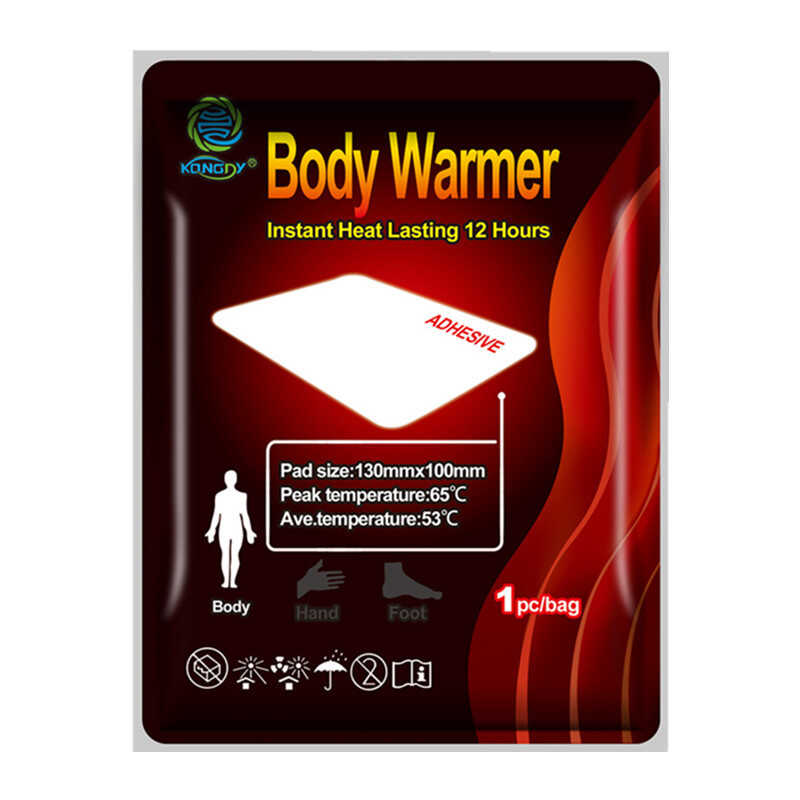
Heat patches are typically formulated to produce temperatures between 40°C and 63°C (104°F to 145°F) for durations ranging from four to twelve hours. Longer-duration patches require more sophisticated formulation balancing to maintain consistent heat output throughout the wear period. Specify your target temperature range and duration clearly when discussing formulations with your manufacturer.
Some suppliers operate as trading companies with no manufacturing capability. They source products from actual factories and add a margin. This arrangement can work, but you lose transparency into production quality and may face communication delays when issues arise. Ask for a video tour of the actual production facility or request a factory audit.
The raw materials in heat patches — particularly iron powder — have known commodity prices. A quote significantly below market rate typically indicates lower-quality ingredients, shortcuts in the production process, or a bait-and-switch pricing model. Always compare at least three supplier quotes before making a decision.
Professional heat patch private label manufacturers expect buyers to request documentation. If a supplier is resistant to providing test reports, certificates, or sample evaluations, consider it a warning sign. Transparency about quality is a baseline professional expectation.
A reputable manufacturer should be able to produce consistent samples that match the quality they promise for mass production. If they can only provide a single sample or are reluctant to send samples before an order, that is a significant red flag.
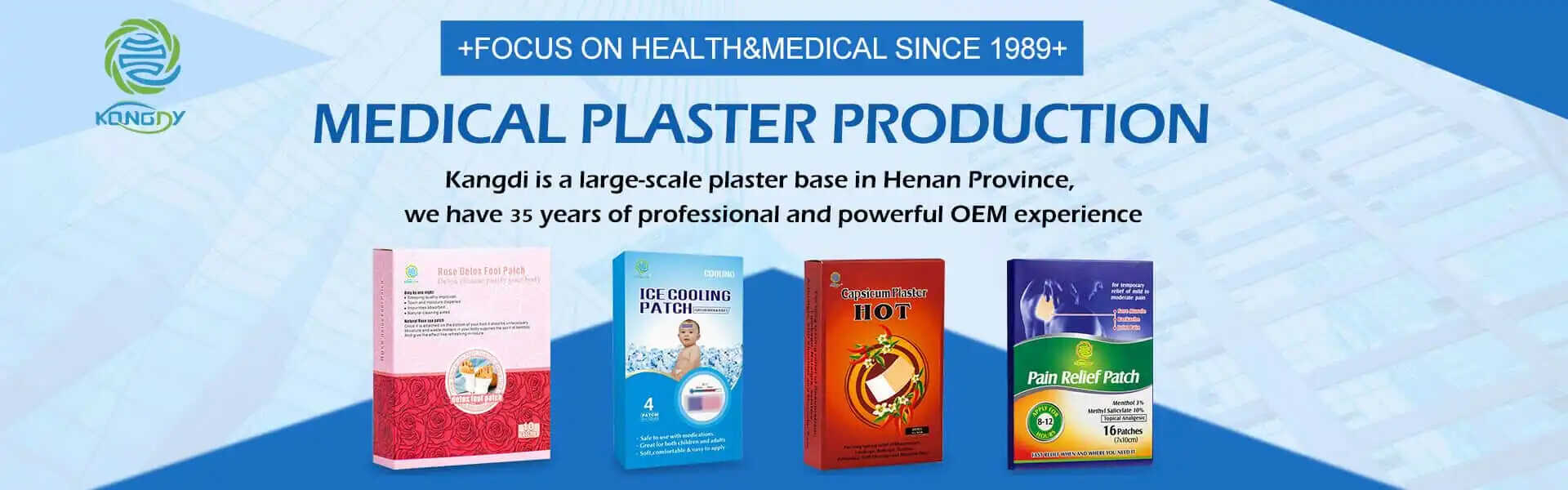
Kangdi Medical has over 37 years of experience manufacturing heat patches and transdermal delivery products for brands worldwide. Our ISO 13485 certified production facility (TÜV audited) is equipped with dedicated heat patch production lines capable of handling both standard formulations and fully custom exothermic patch development.
What sets Kangdi Medical apart as a heat patch OEM manufacturer includes an in-house R&D team that develops and tests exothermic formulations to your exact temperature and duration specifications, ISO 10993 biocompatibility testing and full regulatory documentation support for FDA and CE market entry, flexible MOQ options from pilot-batch quantities to large-scale production runs, professional packaging design services to support your brand's market positioning, and free pre-production samples so you can verify quality before committing to mass production.
Whether you are an established brand looking to expand your product line or a new entrant validating market demand, Kangdi Medical has the manufacturing capability and international business experience to support your growth.
The right manufacturer partner makes all the difference between a product that builds your brand and one that creates ongoing problems. Take the time to verify certifications, test samples, and ask the hard questions upfront. Kangdi Medical welcomes buyer scrutiny — we believe a confident manufacturer that embraces due diligence is the right partner for serious brands.
Email: kongdy202113@gmail.com
WhatsApp: +86 15517541011
Website: www.kongdypatch.com
Specializing in the integration of scientific research, production and marketing of medical devices


 0086-15517541011
 No.4,2nd Area,SME Poineer Park,Industry Cluster Zone,Huaiyang Country, Zhoukou, Henan, China.
 kongdy202113@gmail.com