

Author: Kongdy Patch
Date: 06 17,2026
Motion sickness patches are one of the most useful travel health products available, but the right product, the right timing, and the right application can vary dramatically depending on the type of travel and the type of traveler. A patch that works perfectly for a 6-hour flight may be inadequate for a 7-day cruise. A patch that is safe and effective for adults may be inappropriate for children. A patch that is fine for a healthy adult may be contraindicated for a pregnant traveler. This scenario-by-scenario guide breaks down motion sickness patch use for the 5 most common travel situations: air travel, cruise travel, road trips, family travel with children, and pregnancy-related travel. Whether you are a consumer planning a trip, a retailer advising customers, or a brand owner developing marketing materials, this guide provides the practical, scenario-specific knowledge you need.
Air travel is a moderate motion sickness trigger for some travelers, with susceptibility varying by individual. The risk factors for air motion sickness include: sitting in the rear of the aircraft (more turbulence felt), reading or watching screens during flight, having a history of motion sickness in other contexts, and being tired or dehydrated. For most travelers, the standard scopolamine transdermal patch provides effective prevention when applied correctly. The recommended protocol is: apply the patch behind the ear at least 4-6 hours before departure (8-12 hours is optimal for full effect), wash hands thoroughly after application, and remove the patch after landing if the journey is short. For flights under 6 hours, a single patch applied the night before travel provides full protection. For longer journeys with connections, the patch provides protection for up to 72 hours, with replacement needed for multi-day travel.
For travelers who prefer non-drug options, ginger-based motion sickness patches can be applied 30-60 minutes before departure, with the option of additional application during the flight (depending on the specific product). Natural patches are gentler but may be less effective for severe motion sickness susceptibility. The recommended seating strategies to complement the patch are: choose a seat over the wings (least motion), face forward in the direction of travel, avoid reading or screen use during takeoff and turbulence, focus on the horizon or a fixed point, stay hydrated, and avoid alcohol or heavy meals. The combination of a motion sickness patch and these behavioral strategies provides the most reliable air travel protection.
Cruise travel is the most motion sickness-intensive travel scenario, with continuous multi-day exposure to ship motion in all weather conditions. The risk is highest in the first 24-48 hours (as the body adjusts) and during rough weather, but susceptible individuals may experience symptoms throughout the voyage. The transdermal scopolamine patch is the gold standard for cruise motion sickness prevention, with the 72-hour duration well-matched to cruise segments. The recommended protocol is: apply the first patch 8-12 hours before embarkation (the night before is ideal), replace the patch every 72 hours throughout the cruise (with 24-hour washout periods between patches if possible), continue use for 24 hours after disembarkation if symptoms persist, and remove the patch immediately if severe side effects occur.
For cruise travel, the additional strategies that complement the patch are: choose a midship cabin on a lower deck (less motion felt), spend time on deck in fresh air when symptoms begin, avoid reading or screen use during rough seas, eat light meals and stay hydrated, and consider acupressure wristbands as a complementary approach. For travelers new to cruising or with severe motion sickness history, the scopolamine patch is highly recommended, with consultation with a travel medicine specialist if there are concerns about side effects. For natural-patch users, ginger-based patches can be used throughout the cruise with frequent replacement, though efficacy may be lower for severe susceptibility.
Road trips present unique motion sickness challenges due to the combination of vehicle motion, frequent turns and stops, and the visual sensory mismatch of being a passenger (the body feels motion but the eyes focus on stationary interior). Children are particularly susceptible (the peak age for motion sickness is 2-12 years). For adult road trippers, the scopolamine patch is appropriate for journeys over 2-3 hours, with application 4-6 hours before departure. The patch is less commonly used for road trips than for air or sea travel because oral medications (dimenhydrinate, meclizine) are more convenient for short trips. However, for very long road trips (cross-country drives) or for individuals with severe motion sickness, the patch provides consistent protection without the need to take pills at intervals.
The complementary behavioral strategies for road trips are particularly important: the driver rarely gets motion sickness (focusing on the road reduces sensory mismatch), so susceptible travelers should sit in the front passenger seat when possible, look at the horizon or distant scenery rather than books or screens, take frequent breaks for fresh air, avoid reading or screen use during motion, keep the vehicle cool and well-ventilated, and avoid heavy meals before travel. For children in car seats, the strategies are more limited but include: positioning the child seat where they can see the road, providing distractions that don't involve close-up focus, taking frequent breaks, and using age-appropriate motion sickness products (see Scenario 4).
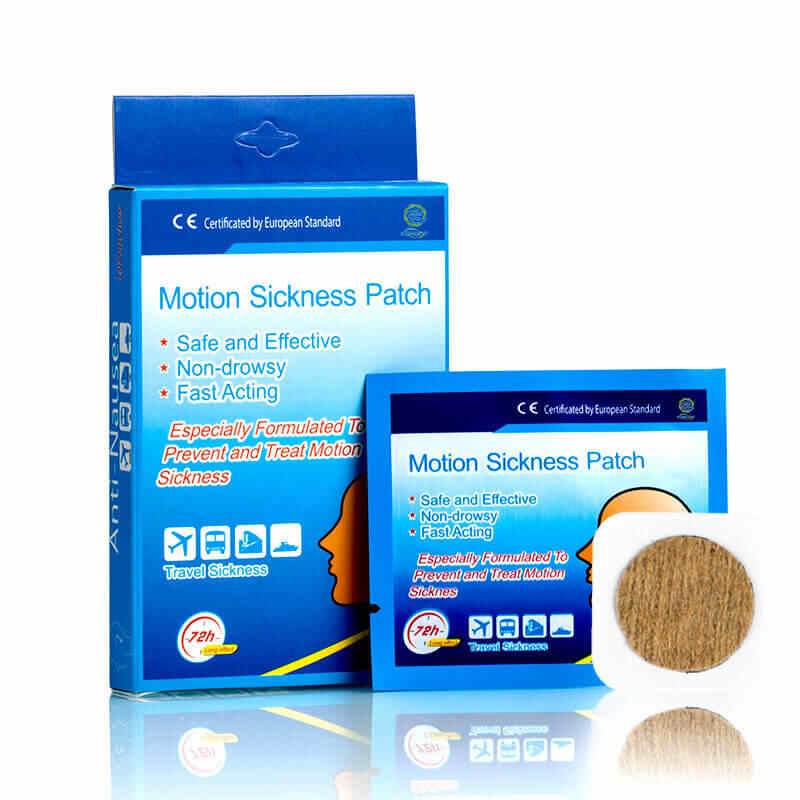
Motion sickness in children is common, with peak susceptibility between ages 2-12, and the scopolamine patch is not approved for use in children. For children old enough for medication, dimenhydrinate (Dramamine, available in pediatric formulations) is the most commonly recommended option, with dosing based on age and weight. For younger children and those who cannot take oral medications, non-drug options are the primary approach: ginger-based motion sickness patches (gentler, can be used in older children with adult supervision), acupressure wristbands (Sea-Bands and similar products), and behavioral strategies. The behavioral strategies are particularly important for children: positioning where they can see the road or horizon, providing distractions that don't involve close-up focus (singing, audio books), ensuring fresh air and cool temperature, avoiding heavy meals or strong smells before travel, and taking frequent breaks.
For family travel with mixed ages (adults and children), the most practical approach is: adult travelers use scopolamine or other adult-appropriate motion sickness products, children use age-appropriate products, and the family focuses on behavioral strategies that benefit everyone. Parents should consult with a pediatrician before giving any motion sickness medication to children, especially for children under 2 or with any medical conditions. The risks of motion sickness medications in children (drowsiness, paradoxical reactions, rare side effects) should be weighed against the benefits. For family road trips specifically, planning for frequent breaks and providing distractions (audio books, music, car games) can be more effective than medication for many children.
Motion sickness during pregnancy is common (especially in the first trimester) and presents special considerations for treatment. Scopolamine patches are generally not recommended during pregnancy, especially in the first trimester, due to limited safety data and the anticholinergic effects that could affect the fetus. Pregnant travelers should consult with their healthcare provider before using any motion sickness medication, including OTC products. The non-drug approaches are preferred for pregnant travelers: ginger (oral ginger in moderate amounts, or ginger-based patches if approved by the provider), acupressure wristbands (safe and often effective), behavioral strategies (positioning, fresh air, breaks), and dietary measures (light meals, hydration, avoiding triggers). For severe cases where medication is necessary, some healthcare providers may recommend specific antihistamines that are considered safer in pregnancy, but this requires individual assessment.
For travelers with other special health conditions, the recommendations vary. Glaucoma (especially narrow-angle): scopolamine is contraindicated due to mydriasis. Urinary retention or prostatic enlargement: scopolamine is contraindicated due to anticholinergic effects. Cardiovascular conditions: scopolamine should be used with caution and only under medical supervision. Elderly travelers: anticholinergic side effects (confusion, urinary retention, constipation) are more pronounced; lower doses or alternative therapies may be preferred. Travelers taking other medications: potential drug interactions should be reviewed, especially with antihistamines, antidepressants, and other anticholinergic medications. In all these cases, consultation with a healthcare provider is essential before using motion sickness patches.
An emerging motion sickness scenario is virtual reality (VR) and immersive gaming motion sickness, which affects 25-40% of VR users to some degree. The cause is similar to traditional motion sickness: sensory mismatch between the visual motion (perceived through the VR headset) and the vestibular and proprioceptive senses (which report no motion). For VR-related motion sickness, the recommended approaches are: gradual exposure (short sessions, building up tolerance), stable VR setups (tethered headsets with consistent frame rates), ginger-based products (mild but helpful for some users), and behavioral strategies (breaks every 15-30 minutes, looking at stationary objects between sessions). The scopolamine patch is generally not recommended for VR motion sickness because the side effects (especially drowsiness and visual disturbances) can interfere with safe headset use and reduce the enjoyment of the experience.
| Scenario | Best Product | Application Timing | Key Considerations |
|---|---|---|---|
| Short flight (under 6 hours) | Scopolamine patch | 4-6 hours before departure | Apply behind ear, remove after landing if preferred |
| Cruise (multi-day) | Scopolamine patch | 8-12 hours before embarkation | Replace every 72 hours, choose midship cabin |
| Long road trip (adults) | Scopolamine or oral meds | 4-6 hours before driving | Front seat, frequent breaks, light meals |
| Family with children | Ginger patch + behavioral | 30-60 minutes before travel | Avoid scopolamine for children, consult pediatrician |
| Pregnancy | Ginger + acupressure + behavioral | As needed, per provider guidance | Avoid scopolamine, consult provider |
| VR/gaming | Behavioral + ginger | Before and during sessions | Avoid scopolamine (side effects) |
Regardless of the scenario, several application best practices apply. Wash hands thoroughly before and after patch application. Apply the patch to clean, dry, hairless skin (typically behind the ear for scopolamine, or other specified areas for natural patches). Press firmly for 10-15 seconds to ensure good adhesion. Rotate application sites to avoid skin irritation with repeated use. Store patches in their original packaging until use, as exposure to air or moisture can degrade the active ingredients. Check expiration dates before use, as expired patches may have reduced efficacy. And keep a record of patch application times for the 72-hour replacement schedule.
The most common mistakes in motion sickness patch use are: applying the patch too late (less than 4 hours before travel, resulting in inadequate protection), removing the patch too early (before the journey is complete, losing protection for the return trip), reusing a single-use patch (losing effectiveness and risking contamination), using the patch in inappropriate populations (children, pregnant women, people with contraindications), ignoring side effects (severe drowsiness, confusion, or visual disturbances should prompt removal and medical attention), and combining patches with incompatible medications (especially other anticholinergics, sedatives, or alcohol). Avoiding these mistakes requires reading the product instructions carefully, consulting with a healthcare provider when uncertain, and following the protocol consistently.
Motion sickness patches are versatile products that can dramatically improve travel comfort, but the right product, timing, and application vary by scenario. The most effective approach is to: identify your specific travel scenario, choose the appropriate product (scopolamine for adults in most cases, ginger for children and pregnant travelers), apply with proper timing (4-8 hours before travel for scopolamine, 30-60 minutes for natural), combine with behavioral strategies, and follow safety precautions. For travelers with special health conditions or who are pregnant, consultation with a healthcare provider is essential.
For brand owners interested in developing motion sickness patch product lines for specific travel scenarios, contact Kangdi Medical. Our R&D team provides formulation expertise for both scopolamine and natural ingredient patches, our manufacturing team ensures quality and compliance, and our commercial team supports your market entry with samples, documentation, and strategic guidance.
Email: kongdy202113@gmial.com
WhatsApp: +86 15517541011
Website: www.kongdypatch.com
Specializing in the integration of scientific research, production and marketing of medical devices


 0086-15517541011
 No.4,2nd Area,SME Poineer Park,Industry Cluster Zone,Huaiyang Country, Zhoukou, Henan, China.
 kongdy202113@gmail.com