
Author: Kongdy Patch
Date: 05 29,2026
The global sports nutrition and recovery market has grown significantly over the past decade, but one segment within it is still underserved by private label brands: topical athletic pain management. Athletes — from weekend warriors to professional competitors — experience muscle soreness, joint stiffness, and minor soft tissue injuries at a rate that creates a massive, recurring demand for pain management solutions. Yet most of this demand is currently served by established pharmaceutical brands and over-the-counter topical analgesics, leaving significant white space for private label brands with the right product and the right positioning.
The sports patch OEM market is uniquely positioned to capture this opportunity. This article explores the market dynamics, key product categories, formulation considerations, and the OEM partnership strategy that brand owners need to succeed in 2026.
The global sports recovery market — encompassing everything from compression gear to topical analgesics — was valued at approximately USD 25 billion in 2024 and is growing at a CAGR of 8–10% through 2030. Topical analgesics and pain relief patches represent a significant and growing sub-segment of this market, driven by several converging trends.
The number of people participating in organized sports globally has increased steadily, particularly in endurance sports (marathon running, triathlon, cycling) and functional fitness (CrossFit, HIIT, bootcamp programs). Aging baby boomers who began athletic pursuits in their 20s and 30s continue to exercise into their 50s and 60s, experiencing higher rates of chronic joint pain and muscle soreness that drive recurring product usage. The shift away from opioid-based pain management in the US and EU has created demand for non-pharmaceutical topical alternatives. And sports medicine and physiotherapy as a discipline has increasingly embraced multimodal recovery protocols that include topical applications alongside manual therapy and exercise prescription.
For brand owners, this translates to a large, growing, and relatively price-insensitive market segment — athletes and active consumers are willing to pay a premium for products that demonstrably improve their recovery and comfort.
Analgesic patches are the largest subcategory in the sports patch market. They are typically worn post-workout or post-competition to manage delayed-onset muscle soreness (DOMS), joint pain from impact loading, and minor strains that do not require medical attention. Key active ingredients include menthol for immediate cooling and sensation-based pain relief, methyl salicylate for anti-inflammatory action, lidocaine for targeted nerve signal blocking in higher-intensity formulations, and capsaicin for longer-term pain relief in premium formulations targeting chronic pain conditions.
Self-heating patches are widely used in the athletic market as pre-performance warmth preparation and post-performance recovery aids. Applying a heat patch before training increases blood flow to muscles and connective tissues, improving flexibility and reducing the risk of strain injuries. Post-training heat application helps relax contracted muscles and accelerate recovery from training-induced tension. Heat patches are particularly popular in endurance sports, team sports, and cold-weather outdoor activities.
Cooling patches provide a different physiological mechanism from heat or analgesic patches. The cooling sensation activates cold receptors in the skin, producing a numbing effect that temporarily reduces pain signal transmission. Cold therapy is well-documented for managing acute inflammation and swelling following intense training or minor injuries. In the sports patch category, cooling patches fill a distinct niche from heat and analgesic products.
Premium sports patch brands are increasingly developing combination formulations that layer multiple active mechanisms. Examples include menthol plus methyl salicylate combinations that provide both immediate cooling sensation and anti-inflammatory action, heat-plus-analgesic combinations where a warming patch is infused with a low-concentration analgesic, and herbal-plus-pharmaceutical combinations where natural ingredients (arnica, turmeric) are combined with conventional actives for a clean-label-with-efficacy positioning.
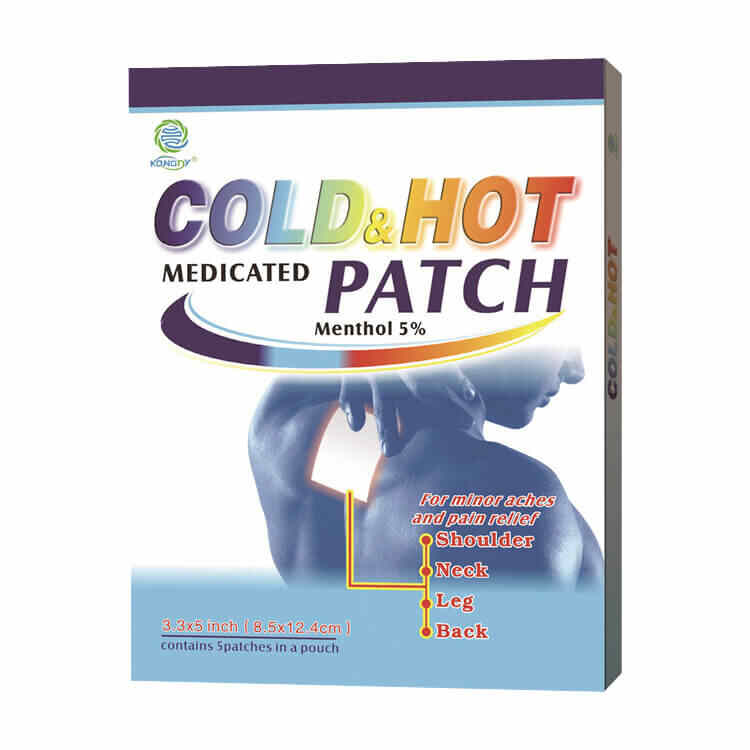
Athletes are typically managing pain during or immediately after training, when they want fast relief to continue their session or speed up recovery. Formulations that provide rapid onset — typically within 5–15 minutes of application — are preferred for post-training use. Menthol-based formulations typically provide the fastest onset of sensation-based relief, while lidocaine formulations provide rapid nerve signal blocking.
For professional and serious amateur athletes who train daily, a patch that provides 8–12 hours of sustained relief is more practical than a product requiring reapplication every 2–4 hours. Sustained-release matrix formulations maintain active ingredient concentration at the skin surface over extended periods, providing ongoing relief without the need for frequent reapplication.
Unlike pain relief products used in clinical settings, sports products are used in training environments, locker rooms, and athletic facilities where strong medicinal odors are socially unwelcome. Athletes and active consumers strongly prefer products with minimal or pleasant odor. Natural fragrance options, menthol with a clean sharp scent, and fragrance-free formulations are all preferred over products with strong camphor or methyl salicylate odors.
Sports patches must perform under conditions that standard consumer patches are not designed for: heavy sweating during intense exercise, friction from clothing and equipment, movement through a full range of motion, and extended wear during multi-hour training sessions or competitions. Adhesion strength, cohesive integrity under sweat exposure, and resistance to mechanical friction are all critical performance requirements that distinguish sports patch formulations from standard OTC analgesic patches.
The professional market is the highest-value segment, characterized by recurring bulk orders, performance-specific product requirements, and strong preference for brands recommended by sports medicine practitioners and athletic trainers. Products targeting this segment require the highest quality formulation standards, full regulatory documentation for the target market, and consistent batch-to-batch performance. Professional athletes and teams often require custom formulation development and exclusivity agreements.
This segment — individuals who train 4+ times per week in endurance, team, or strength sports — represents the largest volume opportunity for private label sports patch brands. They are knowledgeable about product ingredients, willing to pay premium prices for quality products, and active on social media where product reviews and recommendations drive peer conversion. This segment responds strongly to clean-label positioning, evidence-based marketing claims, and authentic athlete testimonials.
Gyms, CrossFit boxes, yoga studios, and physiotherapy clinics represent a B2B channel opportunity for sports patch brands. These operators buy in bulk for member use and can drive significant volume with relatively few accounts. Products sold through fitness facilities benefit from the trust signal of practitioner recommendation.
Trail runners, hikers, mountaineers, and outdoor adventure athletes face unique pain management challenges: they need products that work in outdoor conditions (temperature extremes, water exposure, remote locations with limited access to other pain relief options), are lightweight and portable for multi-day expeditions, and can provide sustained relief for extended periods without reapplication. Heat patches and analgesic patches in compact packaging formats serve this segment well.
Sports analgesic patches containing menthol or methyl salicylate at approved concentrations typically qualify as OTC monograph drugs under FDA regulations and do not require a New Drug Application (NDA) or 510(k) premarket submission. Lidocaine-containing patches require more careful evaluation — concentrations above certain thresholds may trigger 510(k) requirements. Products making "cooling" or "warming" claims without pharmaceutical actives may qualify as medical devices or general wellness products with simpler regulatory pathways.
In the EU, sports analgesic patches are typically classified as cosmetics or medical devices depending on their claims. Products with menthol or methyl salicylate making skin-care or counterirritant claims may qualify as cosmetics under EU Cosmetics Regulation. Products making therapeutic claims about pain relief for specific conditions require CE marking under EU MDR 2017/745.
At Kangdi Medical, we have developed dedicated sports patch formulations designed to meet the demanding performance requirements of athletic consumers. Our sports product line includes high-adhesion patches that stay in place during intense training and sweating, odor-controlled formulations preferred in athletic environments, rapid-onset menthol formulations for post-training muscle recovery, sustained-release matrices for 8–12 hour wear, and heat-analgesic combination options for premium product positioning.
We support sports patch brand development from custom formulation through full production with in-house R&D, ISO 13485 certified quality management, ISO 10993 skin compatibility testing, full regulatory documentation for US, EU, and international markets, flexible MOQ from initial production runs through commercial scale, and packaging design and artwork support for premium brand positioning.
The athletic pain management market is open for new brands in 2026. The key to building a sustainable sports patch brand is starting with a genuinely quality product — fast-acting, odor-appropriate, sweat-resistant, and backed by proper regulatory documentation — and partnering with an OEM manufacturer who understands both the product and the market.
Contact Kangdi Medical with your sports patch brand concept and target athlete profile. We will provide a detailed formulation proposal, sample evaluation package, and production plan tailored to your market entry strategy.
Email: kongdy202113@gmail.com
WhatsApp: +86 15517541011
Website: www.kongdypatch.com
Specializing in the integration of scientific research, production and marketing of medical devices


 0086-15517541011
 No.4,2nd Area,SME Poineer Park,Industry Cluster Zone,Huaiyang Country, Zhoukou, Henan, China.
 kongdy202113@gmail.com