
Author: Kongdy Patch
Date: 05 25,2026
Look at the ingredient label of almost any pain relief patch, and you'll likely see menthol listed among the active ingredients. It's one of the oldest, most widely used, and most trusted topical analgesics in the world—and for good reason.
But what exactly is menthol? How does it work to relieve pain? And why is it particularly effective when delivered through a transdermal patch? This article answers all your questions.
Menthol is an organic compound classified as a monoterpene alcohol. It occurs naturally in the essential oils of mint plants—particularly Mentha arvensis (wild mint) and Mentha piperita (peppermint). Menthol has been used for medicinal purposes for thousands of years, dating back to ancient Egypt, Greece, and China.
Key chemical facts:
Menthol's pain-relieving effect is one of the best-studied mechanisms in topical analgesics. It works through a fascinating interaction with the body's thermoreceptors—the sensory receptors that detect temperature.
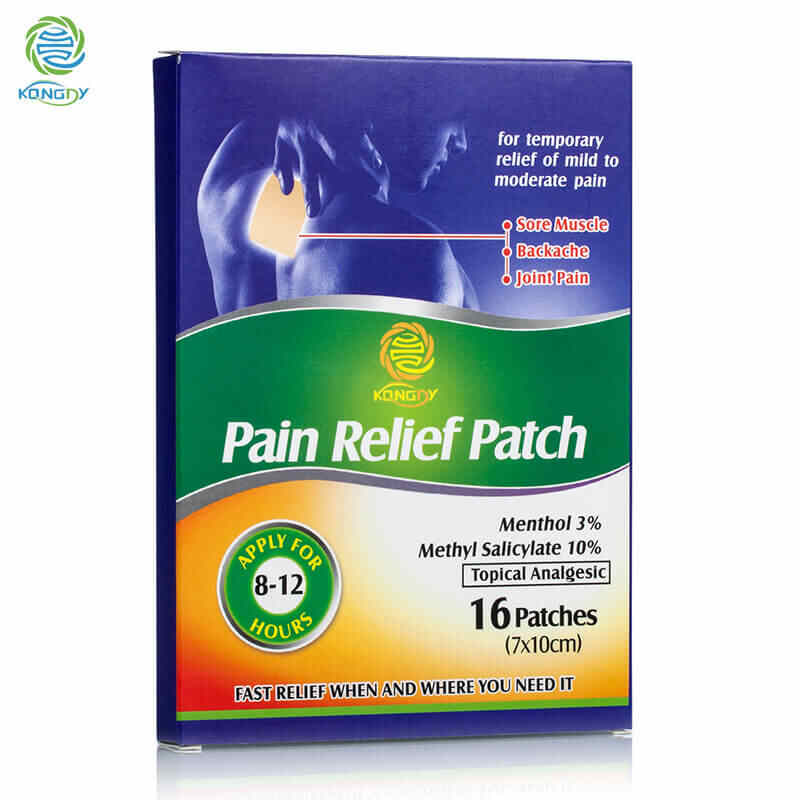
Menthol binds to and activates the TRPM8 (Transient Receptor Potential Melastatin 8) receptor—also known as the cold-sensitive receptor. This receptor is naturally activated by temperatures below 25°C (77°F).
When menthol activates TRPM8, it sends a signal to the brain that the skin is experiencing cool temperatures—even though no actual temperature change has occurred.
Once the brain receives the "cold" signal via TRPM8, a competing sensory signal is generated. According to the Gate Control Theory of Pain (Melzack & Wall, 1965), the sensory pathways carrying the "cold" signal partially inhibit the transmission of pain signals along adjacent nerve fibers.
In simple terms: the cooling sensation creates a "gate" that makes it harder for pain signals to reach the brain. The result is a perceived reduction in pain—even though the underlying tissue condition hasn't changed.
Menthol also causes local vasodilation—the widening of blood vessels in the skin. This improves local blood circulation, which helps flush out inflammatory mediators and supports natural tissue repair.
Menthol can be delivered in many forms—creams, gels, balms, sprays, and patches. But transdermal patches offer distinct advantages:
| Condition | Why Menthol Helps | Typical Effectiveness |
|---|---|---|
| Muscle strains and sprains | Counter-irritant + improved local circulation | High |
| Neck and shoulder tension | TRPM8 cooling + vasodilation | High |
| Lower back pain | Localized delivery to lumbar area | Moderate to High |
| Arthritis (mild-moderate) | Reduces inflammatory sensation | Moderate |
| Post-exercise muscle soreness | Cooling sensation + circulation support | High |
| Joint stiffness | Vasodilation warms the joint area | Moderate |
| Headache (temple application) | Cooling + counter-irritant effect | Moderate |
Important: Menthol patches work on the sensory nervous system rather than addressing the underlying cause of pain. For chronic conditions, combine menthol patches with other treatments (physical therapy, exercise, proper medical care).
| Ingredient | Mechanism | Best For | Onset | Notes |
|---|---|---|---|---|
| Menthol | TRPM8 activation (cooling) | Acute muscle pain, tension | Immediate | Fast-acting, well-tolerated |
| Capsaicin | Substance P depletion (warming) | Chronic nerve pain | Days to weeks | Cumulative effect; hot sensation |
| Lidocaine | Local anesthetic (nerve block) | Sharp, acute pain | 10–20 minutes | Strongest OTC option |
| Methyl salicylate | Anti-inflammatory (aspirin-like) | Inflammatory pain | 20–30 minutes | Similar to oral NSAIDs |
| Combination | Multiple mechanisms | Most conditions | Immediate | Most effective overall |
Menthol patches are among the safest topical analgesics available:
Minor possible side effects:
Contraindications:
KONGDY menthol pain relief patches are manufactured by Henan Kangdi Medical Devices Co., LTD—a factory with 37+ years of experience in transdermal patch production.
Our advantages:
Menthol is one of the most effective, well-researched, and safest topical analgesics available. By activating the TRPM8 cold receptor and triggering the Gate Control mechanism, it provides real, measurable pain relief without systemic side effects or drug interactions.
Transdermal patch delivery enhances menthol's effectiveness by providing sustained, controlled release over 8–12 hours—far superior to creams or gels.
Whether you're looking for personal pain relief or OEM menthol patch solutions for your brand, KONGDY has the formulation expertise, quality systems, and manufacturing capacity to meet your needs.
Interested in menthol patches for your brand?
Email: kongdy202113@gmail.com
WhatsApp: +86 15517541011
Website: www.kongdypatch.com
Specializing in the integration of scientific research, production and marketing of medical devices


 0086-15517541011
 No.4,2nd Area,SME Poineer Park,Industry Cluster Zone,Huaiyang Country, Zhoukou, Henan, China.
 kongdy202113@gmail.com