
Author: Kongdy Patch
Date: 06 30,2026
The steam eye mask category has expanded far beyond the original 10-minute disposable product. Today's consumers can choose from 8 distinct product types: 10-minute economy masks, 20-minute standard masks, 30-minute spa-grade masks, lavender aromatherapy masks, herbal formulation masks, USB rechargeable electric masks, cooling-gel hybrid masks, and reusable silicone masks. Each type has specific advantages, ideal use cases, and price points. Choosing the right one can transform your relaxation, sleep, or self-care routine. This 2026 decision framework walks you through the 8 main types, helps you identify which is right for your specific needs, and provides practical recommendations for first-time buyers, regular users, and gift purchases.
Type 1, 10-minute economy masks (USD 0.30-0.80 per mask). Basic single-use masks that provide 8-12 minutes of gentle warmth, typically 38-40°C maximum. Best for: first-time users, occasional use, travel, promotional giveaways. Pros: very affordable, widely available, no commitment. Cons: short duration, basic warmth, often have stronger chemical smell. Type 2, 20-minute standard masks (USD 0.80-1.50 per mask). The most common type, with 18-22 minutes of consistent warmth at 40-42°C. Best for: regular users, daily use, sleep aid, post-work relaxation. Pros: good balance of price and performance, widely available, established quality. Cons: still single-use, generates waste, may have mild smell.
Type 3, 30-minute spa-grade masks (USD 1.50-3.00 per mask). Premium masks designed for spa and wellness use, with 28-32 minutes of consistent warmth at 42-45°C, often with better materials and finer temperature control. Best for: serious self-care users, spa professionals, premium positioning. Pros: longer duration, higher temperature, better materials, more refined experience. Cons: more expensive, still single-use. Type 4, lavender aromatherapy masks (USD 1.00-2.00 per mask). Standard 20-minute masks with added lavender or other essential oils for enhanced relaxation. Best for: stress relief, sleep aid, aromatherapy enthusiasts. Pros: combined benefits of warmth and aromatherapy, mid-range price. Cons: scent may be too strong for some users, may trigger allergies in sensitive individuals.
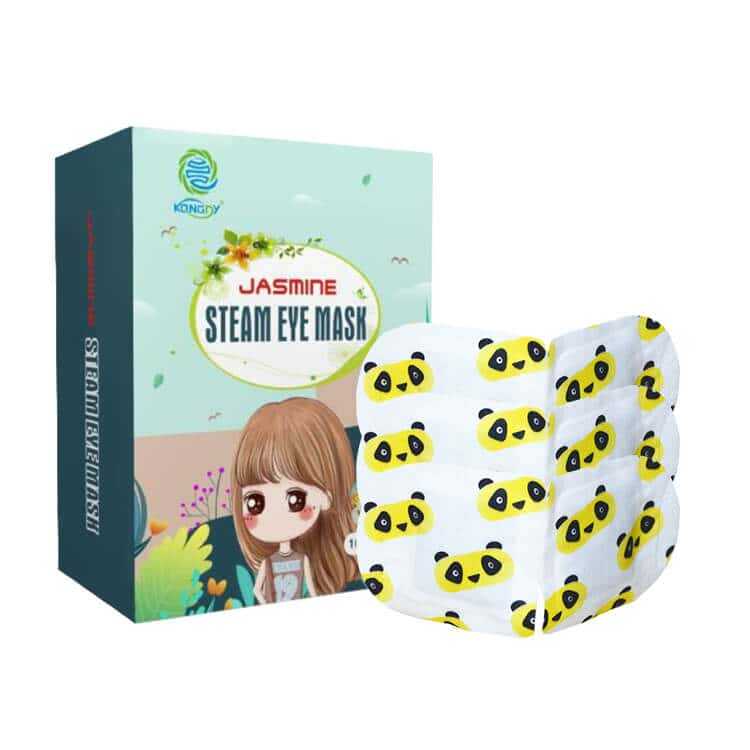
Type 5, herbal formulation masks (USD 1.50-3.00 per mask). Premium masks with traditional herbal ingredients (chrysanthemum, rose, green tea) for additional skin and relaxation benefits. Best for: traditional medicine enthusiasts, premium self-care, gift purchases. Pros: unique positioning, perceived as more natural, gift-worthy. Cons: more expensive, herbal ingredients may trigger allergies. Type 6, USB rechargeable electric masks (USD 30-80 per mask, reusable). Reusable masks with electric heating elements, adjustable temperature (typically 35-50°C), and 30-60 minutes of use per charge. Best for: regular users seeking sustainability, tech enthusiasts, long-term value seekers. Pros: reusable, adjustable temperature, cost-effective for heavy users, no waste. Cons: higher upfront cost, requires charging, may be less comfortable than disposable.
Type 7, cooling-gel hybrid masks (USD 2.00-4.00 per mask). Premium masks that combine warming steam technology with cooling gel technology, providing both heat and cool in sequence. Best for: headache relief, puffy eyes, premium positioning. Pros: dual functionality, premium experience, unique positioning. Cons: most expensive single-use option, may be confusing to use. Type 8, reusable silicone masks (USD 20-50 per mask, reusable). Silicone-based masks that can be heated in the microwave or chilled in the freezer, providing reusable temperature therapy. Best for: sustainability-focused users, long-term value seekers, those who want both hot and cold therapy. Pros: reusable, versatile, no waste, can be used hot or cold. Cons: requires microwave or freezer, less convenient than disposable, may not provide the same gentle warmth as steam.
Question 1, how often will you use it? Occasional use (a few times per month): Type 1 or 2 is the most cost-effective choice. Regular use (weekly): Type 2 or 4 provides the best balance of price and experience. Daily use: Type 6 (rechargeable electric) provides the best long-term value and sustainability. Question 2, what is your primary goal? Sleep aid: Type 2 or 4 (with lavender) is most appropriate. Stress relief: Type 4 (aromatherapy) or 3 (spa-grade) provides enhanced relaxation. Headache or eye fatigue: Type 7 (cooling hybrid) addresses both heat and cold needs. Travel: Type 1 (compact, affordable) is most practical. Question 3, what is your budget? Low budget: Type 1 or 2. Mid-range budget: Type 2, 4, or 5. Higher budget: Type 3, 6, or 7. Sustainability focus: Type 6 or 8 (reusable). Question 4, do you have any sensitivities? Sensitive skin: Choose masks with hypoallergenic materials and fragrance-free. Sensitive to scents: Avoid Types 4 and 5. Allergy to herbal ingredients: Avoid Type 5.
For first-time users: start with Type 2 (20-minute standard) from a reputable brand. This is the most common type, widely available, and provides a good baseline experience without significant investment. Avoid starting with Type 3 or higher, as you may not yet know your preferences. For regular users seeking value: Type 2 in bulk packs (typically 10-20 masks per pack) provides the best value, with per-mask costs as low as USD 0.50-0.80. For sustainability-focused users: Type 6 (USB rechargeable) provides the best long-term value, with per-use costs of less than USD 0.10 after the initial investment. For gift purchases: Type 3 (spa-grade) or Type 5 (herbal formulation) provides the most premium presentation, with attractive packaging and a distinctive experience. For travelers: Type 1 (10-minute economy) is the most compact and affordable, with no need for charging or special storage. For headache sufferers: Type 7 (cooling hybrid) provides the unique benefit of both warm and cool therapy in one product.
Mistake 1, buying the cheapest option without considering quality. The cheapest masks often have shorter duration, weaker materials, and stronger chemical smells, leading to disappointing first experiences. Invest in a reputable brand for your first purchase. Mistake 2, assuming all 20-minute masks are the same. The temperature consistency, material quality, and fit vary significantly across brands, even within the same nominal category. Read reviews and consider brand reputation. Mistake 3, choosing aromatherapy without considering sensitivities. The added scents in Type 4 and 5 masks can trigger allergies or sensitivities in some users; choose fragrance-free if you have any history of sensitivity. Mistake 4, over-investing in reusable options without considering use frequency. Type 6 (rechargeable electric) is only cost-effective if you use it regularly; if you only use steam masks occasionally, Type 2 in bulk is more practical. Mistake 5, ignoring the brand reputation. The steam eye mask market has many low-quality products from unknown brands; sticking with established brands ensures better quality and safety.
The tips for getting the most from your steam eye mask include: 1, use at a comfortable time when you can relax for 20-30 minutes (not during work or when you need to stay alert); 2, close your eyes and breathe deeply during use to enhance the relaxation effect; 3, combine with other relaxation practices (meditation, soft music, light stretching) for a more complete experience; 4, store masks in a cool, dry place to maintain their effectiveness; 5, use within the expiration date (typically 2-3 years from manufacture) for optimal heat generation; 6, if using for sleep aid, use 30-60 minutes before bedtime to allow the relaxation effect to transition into sleep. The users who benefit most from steam eye masks are those that use them consistently and combine them with other relaxation practices.
The steam eye mask category is diverse and growing, with opportunities for brands that combine product quality with clear consumer education. The brands that succeed are those that match products to specific use cases, that educate consumers about the differences between product types, and that build trust through consistent quality. The brands that fail are those that treat all masks as commodity products, that ignore the importance of fit and material quality, or that overpromise results. At Kangdi Medical, we support steam eye mask brands with product development, consumer education, and category expertise, with 15+ years of experience in the category.
Email: kongdy202113@gmail.com
WhatsApp: +86 15517541011
Website: www.kongdypatch.com
Specializing in the integration of scientific research, production and marketing of medical devices


 0086-15517541011
 No.4,2nd Area,SME Poineer Park,Industry Cluster Zone,Huaiyang Country, Zhoukou, Henan, China.
 kongdy202113@gmail.com